Showing posts with label plastic surgery. Show all posts

Friday, February 5, 2010

What Happens If Your Mother Has Plastic Surgery?

by Delia Ephron
Posted: February 3, 2010 01:13 PM
The Huffington Post

I haven't been watching many reality shows lately because of the crying. There is simply too much of it. Last season on Project Runway, Christopher cried because he was sure that he was the only person in the world who would design a dress inspired by a rock (something I am sure he is wrong about). I have no idea how much crying there is on The Hills, since I was never a fan, but it did catch my attention in People magazine that Heidi Montag, star of the show, cried after she had ten plastic surgery procedures in one day. Heidi, I know from a quick Google search, is 23, although since her plastic surgery she looks 33. Which is actually something to cry about.

I have been interested in and done research on this subject spun slightly different: What happens if your mother (not your favorite reality star) has plastic surgery? This is the subject of my new novel for teenagers, The Girl with the Mermaid Hair.

If, as a teenager, you spend hours in front of a mirror deciding, say, whether one nostril is larger than the other or worrying whether your breasts point in different directions (typical teenage obsessing), do you outgrow this madness or make more radical choices if your mother comes home with larger lips, a smaller ass, a new chin, a different nose, bigger breasts? How do you feel if your mom suddenly doesn't have any expression in her face? Or if you look into your mother's eyes and no one is home?

Your main job as a teenager is to learn to love yourself. How can you do this if your mother hates herself?

In my research, what was so startling was how aware all the teenage girls were of their mother's fear, or, more accurately, their hatred, of aging. One girl said, "Every time I wrinkle my forehead, my mother points it out and tells me not to. Even if I'm in the middle of a really important conversation." Another spoke about "competitive dieting" with her mom, how she couldn't help but engage in it even though she thought her mother's obsession with fat was "crazy." There is a study out this week from the Girl Scouts of the USA telling us what we already know, which is that the fashion industry and its use of ultra-thin models is making teenage girls too obsessed with being skinny, and distorting their body image. In my more limited unscientific research, the mothers are as strong an influence. Going on shopping trips with mom, usually a bonding experience, became all about hearing moms moan about their fat and rolls. Or seeing your mother trying on something, look in the mirror and say, ""I look ugly."

I have vivid memories of my own adolescence when the main purpose of shop windows was not to see the clothes in them but my own reflection, when hours could be spent in front of a mirror deciding if my eyebrows matched. Emotionally, teen life is no different today, but now you can act on your own insecurities. You can fix them.

A lot of healthy acting out occurs in the mirror, as my research showed. Singing and dancing and even telling off people who hurt your feelings or trying on new identities. But there was also a lot of obsessing about body image. One girl got dressed using four mirrors, running from one to the next: one had good indoor lighting, one was a "skinny" mirror, one had natural light, one she could get the closest to. "If something is wrong with you," a teenage girl said, "the mirror magnifies it." Another said, "If I think something's wrong with me, like my thighs are too fat, when I look in the mirror that's all I see."

God knows, I am not advocating growing old naturally, just to remember what a tender fragile time adolescence is. In my research, one teenage girl confided, "Seeing my mother after her surgery scared me to death." We need our moms to be stable and secure. I have so many friends who will tell me with surprise, when looking at photos of themselves when they were younger, "Hey, I was really cute. I didn't realize it." No one does. You have to get older to realize it. Imagine if you got older and realized that you'd destroyed your younger self. You had operated it away.

Now that's something to cry about.

~~~~~~~~~~~~~~~~~~~

* Take it from one who knows..... that IS something to cry about. -Lucille

Friday, June 5, 2009

10 Things Plastic Surgeons Won't Tell You

1. “I trained a whole weekend to learn this procedure.”

With skyrocketing malpractice premiums and the Kafkaesque insurance system, it’s little wonder M.D.’s are flocking to the plastic surgery biz. It’s easy to get into (legally, any doctor can do it), patients pay up front for surgery, and demand is up: The number of cosmetic procedures increased 59 percent from 2000 to 2007, making it a $12.4-billiona- year industry.

The best surgeons spend years honing their chops in residencies; by contrast, those hoping to offer a little Botox along with flu shots tend to opt for less rigorous training—like the popular weekend classes at the International Society of Cosmetogynecology, an odd but official-sounding organization that promotes plastic surgery as an extension of gynecology. Its three-day courses cover liposuction and injectables. Empire Medical Training offers an even thriftier nine-hour seminar on lipo—two hours of which are devoted to marketing.

Real plastic surgeons are appalled. “Any licensed physician can put up a plaque and say they do plastic surgery regardless of training, and that’s scary,” says Roxanne Guy, president of the American Society of Plastic Surgeons (ASPS).

2. “I make a mint off other surgeons’ mistakes.”

When 35-year-old Kelley Young of Fresno, Calif., looks at her wedding photos, all she can see is her plastic surgery disaster: Young’s nose is bent to one side and its tip is misshapen. “Those photos just look ugly, ugly all over,” she says. Later, when Young went back to her doctor for a fix, he tried snapping her nose back into place—without anesthetic. A year later she finally found a competent plastic surgeon to fix the problem.

Young is hardly alone. In fact, she’s part of a new growth area in the field: fixing botched cosmetic procedures. According to a survey by the American Academy of Facial Plastic and Reconstructive Surgery, one in five nose jobs are corrections of a failed procedure. Stanley Frileck, an associate clinical professor of plastic surgery at UCLA, says that 35 percent of his work is fixing the mistakes of other surgeons. Botched rhinoplasty, face-lifts, and eyebrow procedures are the most common. Not only are these repairs more complex than the initial surgery but they can cost up to three times as much, Frileck says—and the result is never quite as good as a welldone procedure would have been in the first place.

3. “Sure, I can turn back the clock, but it just starts ticking again.”

Just because you shelled out $10,000 for a face-lift doesn’t mean you’re set for life. Even the most skillful work will need some attention a decade or two down the line. Some jobs may require supplemental fillers (compounds that are injected under wrinkle lines in the skin) or minor surgery to tighten up a few sags, while others could call for a repeat of the same procedure. “All cosmetic surgery has a life span,” says Richard D’Amico, president elect of the ASPS. “Procedures will not last forever.”

Surgery to tighten droopy eyelids, for example, often needs to be revisited after a decade, and any work on the lower face will age more quickly than that on the upper face, since the lower face is fleshier and has less bone for sagging jowls to hang onto. Breast implants are the most predictable: Like any foreign objects in the body, they’ll eventually be surrounded by scar tissue, which can make breasts hard and painful. That’s why every decade or two, depending on the patient, most implants need to be replaced. While 300,000 women receive implants annually, 25,000 have them removed. “It’s strictly a function of time,” Frileck says.

4. “You’d be better off spending this money on a good therapist.”

Plastic surgery doesn’t make you crazy, but those who have had it, both men and women, are more likely to suffer from psychological problems. Several studies in the mid-1990s found that women who chose to get breast implants were two to three times more likely to commit suicide; other studies have found that 20 percent of plastic surgery patients have undergone some form of psychological treatment.

Up to 15 percent of plastic surgery patients suffer from “body dysmorphic disorder (BDD),” marked by obsessive and exaggerated concern over aspects of one’s appearance. It may sound like a convenient diagnosis for our beautyobsessed culture, but it is a very real, very dangerous condition, says David Sarwer, an associate professor of psychology at the University of Pennsylvania School of Medicine. “At the extreme, people will not leave their home, they’re so preoccupied with how they look,” Sarwer says. BDD sufferers often seek plastic surgery hoping it will magically transform their lives, and when it doesn’t, they may harm themselves. Every plastic surgeon worth his salt asks probing questions to gauge patients’ motives, but to date there’s no standardized screening tool for BDD.

5. “Of course I’m board certified—for what that’s worth.”

A board-certified plastic surgeon should be the best, right? Not always. Because any doctor can perform any cosmetic procedure, and because certification boards are self-regulating, many certifications aren’t so telling. The American Board of Laser Surgery, for example, certifies nurses, veterinarians, and oral surgeons in laser surgery— through a take-home written exam. Meanwhile, two different boards certify practitioners of “mesotherapy,” the use of injections to dissipate cellulite, although there’s little evidence to suggest it works. “To say you’re ‘board-certified’ is meaningless,” says Michael McGuire, of the ASPS.

There are some certifications that matter: The American Board of Plastic Surgery is the most rigorous for this specialty and the only certification body for plastic surgery recognized by the American Board of Medical Specialties. Members of the ABPS have completed residencies in both general surgery and plastic surgery and are trained to do all procedures from liposuction to nose jobs. Likewise, physicians with board certifications in either otolaryngology or in facial plastic and reconstructive surgery also have reliable training in procedures above the collarbone.

6. “You can get this done for a fraction of the cost overseas.”

When Janette McNeal decided to get some work done, the Tulsa, Okla., homemaker balked at the $10,000 cost of a faceand neck-lift. McNeal decided to look overseas, and wound up having surgery in Malaysia, where the same $10,000 bought her the face-lift plus liposuction in three areas, a tummy tuck, and an eyelid lift.

It’s not for everyone, but “medical tourism” is less risky than it used to be. Since 2000, Joint Commission International, the international wing of an organization that accredits U.S. hospitals, has okayed 110 facilities overseas. Also, private companies that do their own screening have sprung up to guide patients through the process. One of those, MedRetreat, visits each hospital it uses and guarantees that the best surgeons will be on the case.

But medical tourism still has its hazards. It can be tough determining doctors’ qualifications, and eager patients may try to cram in too many surgeries at once, requiring a longer recovery and boosting the chance of lethal blood clots, a risk already increased by flying. Travel following surgery can also up the possibility of infection. And if something goes wrong, well, forget a malpractice suit.

7. “I make my living off the fat of the land—literally.”

The number of Americans who lose 100 pounds or more is increasing. But dropping the weight is just part of the process; next comes what’s known as body contouring. After a person loses so much weight, his skin does not snap back, leaving folds of excess skin on his thighs, back, torso, abdomen, and neck, which can cause rashes and make fitting into clothes and exercising problematic. In many cases the extra skin must be removed through extreme versions of mastopexy (or breast lifts), tummy tucks, and other procedures. And there are often complications: The remaining damaged skin can die or separate after the procedure, requiring additional surgeries. Despite all the problems, body-contouring surgery is increasingly popular; between 2004 and 2007, the number of procedures increased by 20 percent, to nearly 67,000.

After Michele Fitch, a teacher in Melbourne, Fla., lost 190 pounds, she waited eight years to have the follow-up surgery. She wanted to make sure she could keep the weight off, and she needed to save money—insurance often pays for the gastric bypass, but it rarely covers contouring. First she had skin removed from her arms and chest. Then 10 pounds of skin was cut from her sternum to her bikini line and from hip to hip. Out-ofpocket cost to date: $33,000. And Fitch still faces two more surgeries on her legs.

8. “Long-term effects? Beats me.”

More than most other specialists, plastic surgeons are under pressure to compete with one another, and an easy way to get the upper hand is to offer all the latest technology. “There is great pressure for physicians to jump on the bandwagon of a new filler or technique before it is really evaluated,” McGuire says. “And their ethics are not too high to begin with.”

Doctors are often happy to try new techniques before the long-term effects are known, and in some cases they’re performing procedures that already have poor track records. Injecting a person’s own fat from other areas into her breasts for enlargement is on its way to popularity again. When this was tried years ago, much of the fat died, causing unsightly rippling and lumps. But that wasn’t the worst of it: The tiny calcifications that resulted from the dead fat were easily confused with tumors and rendered mammograms less effective. While some argue that new techniques and better mammograms have eliminated these problems, McGuire is certain that this rush to the latest and greatest will once again produce disastrous consequences.

9. “Silicone’s back—and putting my kid s through college!”

Fifteen years after the U.S. Food and Drug Administration banned them for elective use and after massive class-action lawsuits bankrupted their manufacturer, silicone breast implants have gotten the green light again. Though there’s no conclusive evidence that silicone from ruptured implants causes the problems once associated with it, the FDA is staying cautious, recommending that patients undergo a long list of expensive follow-up tests over the long term. Due to concern about leaks, the FDA has required labeling that instructs those with the implants to get MRIs to check for ruptures after three years, then once every two years after that. Silicone implants should also be replaced every 10 years.

There’s no actual mandate for these procedures, and some doctors say that patients won’t follow through, especially once they start tallying the bill: The initial surgery can cost between $5,000 and $10,000; MRIs are about $1,500 apiece, and you’ll need four over a decade; and the replacement surgery can cost about as much as the original procedure. Grand total: between $11,000 and $16,000 every 10 years.

10. “Those who need surgery the most will benefit from it the least.”

Most people turn to plastic surgery when they feel age has finally caught up with them and nothing else will rid them of that troublesome bulge. But the dirty little secret of plastic surgery is that with many procedures, the more you need it, the less you can expect.

Those who have damaged skin, more common as we age, can expect some serious complications. Skin stretched by weight gain, for example, loses its elasticity; following liposuction it may not snap back into place but hang like an apron over the area that was suctioned. Because smokers have poor circulation to the epidermis, their skin can die after surgery, meaning months of unsightly scars and possible additional surgery. And procedures such as a face-lift done on sun-damaged skin won’t last as long and may result in more-prominent scarring. Likewise, those hoping for dramatic weight loss from liposuction are looking in the wrong place; surgeons say it’s meant only to shape a certain part of the body in conjunction with diet and exercise.

Ironically, those who need cosmetic surgery the least—generally, those who are younger and opt for a little tweaking here and there—are going to fare the best. “How well a person cares for themselves throughout life is very important,” says Mark Jewell, former president of the American Society for Aesthetic Plastic Surgery.

Thursday, May 7, 2009

Hurt by Economy, Plastic Surgeons Find Hope in New Products

Always looking for new ways to suck you in.

One way or another, they will find ways to exploit and capitalize on our insecurities and mutilate our self-esteem.


Liposuction needle display

Flesh-cutting tools

LAS VEGAS — They can lift breasts and firm up thighs, but the nation’s cosmetic surgeons admit they are powerless over a sagging economy.

And yet, hope is rising, along with the Dow, what with the first competitor to Botox just approved last week and potentially revolutionary new treatments on the horizon, including stem cell injections and a cream that can remove unwanted facial lines.

“Business has definitely been flat,” Dr. Brian Kinney, a Los Angeles surgeon, said at the annual meeting of the American Society for Aesthetic Plastic Surgery, which concludes here Thursday. “I can think of a particular woman who said in October she wanted a facelift but she said, ‘Well, I need to sell a house because I want to make sure I’m secure.’ And then she told me in March she was still waiting, the real estate market’s down.”

The number of cosmetic procedures in the United States last year fell 12.3 percent from 2007, to just over 10.2 million, according to the organization. That is a setback for a business that had seen unabated growth since 1997, when about two million procedures took place.

The biggest growth area has been nonsurgical procedures, owing largely to the success of Botox, a botulinum toxin that works by numbing and relaxing facial muscles that create wrinkles. Yet the company that markets Botox, Allergan Inc., is bracing for new competition now that the Food and Drug Administration has approved the second botulinum toxin for similar use, Dysport, produced by the French drugmaker Ipsen Biopharm Ltd.

“Everybody is excited about it because it’s the first competitor to Botox in seven years,” said Dr. Z. Paul Lorenc, who practices in Manhattan and who views Dysport as a faster-acting, longer-lasting and potentially less-expensive option. “It’s also a softer look.”

Also pending are studies into topical versions of these muscle-numbing medications, although none are expected to come to market for years. Already, though, doctors here are debating how useful or practical it might be.

“There’s a concern that if you were to give the patient the cream to take home, they’d just keep putting more and more and more on, and you’d have a dosing problem,” Dr. Kinney said. “And patients might start putting it on other places, like around the mouth, and then they might not be able to move their mouths properly.”

Stem cell treatments were on the minds of many as well, although the potential applications are vague. The thinking seems to be that doctors may some day be able to extract stem cells from a patient’s own fat and use them in lieu of breast implants to produce self-regenerative tissue that would provide a more natural feel than silicon-gel or saline, now the standard. No one is sure yet if it will work and several doctors voiced concern as to whether it is safe and how they would be able to regulate the tissue growth.

Another potential growth area is in nonwhite patients, who have long been underserved said Dr. Julius W. Few, a surgeon from Chicago who lectured at the conference on how to provide nose jobs for non-Caucasian patients while preserving their ethnicity.

“We know by our statistics that this is a growing group by interest in plastic surgery,” said Dr. Few, who performs as many as 40 nose jobs a year on nonwhite patients. “Being African-American, when I was growing up, it was said at my house and a lot of other houses that plastic surgery was only for wealthy white people. That seemed unfair to me.”

The four-day event was a serious medical conference of nearly 2,500 practitioners and exhibitors attending live demonstrations, listening to debates over newer techniques and browsing countless models of implants and needles that were on display.

Still, the convention offered provocative sessions like “137 Rhinoplasties in 20 Patients: What Went Wrong?” “The Weird Smile After Facelift Surgery: A Dynamic Investigation”. (My note: "Dynamic Investigation"? Who are they kidding? How do they "investigate" mistakes they refuse to admit they make? In all the years I have been reading plastic surgery journals, the last articles published about bad outcomes which actually involved the VICTIMS in such studies was in the late 1980's. How can surgeons properly investigate "what went wrong" when surgeons who perform botched operations do not accurately describe what they actually did in operative reports. Are these "investigators" bringing the actual damaged PATIENTS before a group of their peers to examine and discuss methods and techniques which may be responsible for these bad outcomes? Of course not! I challenge any surgeon to prove otherwise. Even in academic settings, this is not done. They do it with photos. They lie to each other. There is no such thing as rational, scientific investigation of bad outcomes in plastic surgery. It simply does not exist. Why? Because proper investigation would mean involving the PATIENT...the very person they will call "crazy" or say suffers from BDD rather than admit they made a mistake.)

Doctors at the conference hoped to get out the message that they were far from the stereotypes of predatory practitioners who take advantage of patients’ insecurities. They resent portrayals like that from a “Sex and the City” episode in which Samantha Jones, played by Kim Catrall is worried about aging and wants a small operation but is told by a physician that she ought to consider several other procedures. She eventually decides on “aging gracefully.”

Of the fictional surgeon’s behavior, Dr. Robert Singer of San Diego said, “That never happens.” Dr. Singer added: “I generally will turn that question in a different way when a patient asks me what I think she needs done. It’s not a matter of what I say. It’s what bothers you.”

Dr. Singer said that part of the challenge was managing patient expectations.

“The public wants something that has essentially no down time, that has maximum improvement, that is non-invasive, that has no discomfort and that has no cost,” Dr. Singer said. “They want magic. That magic pill doesn't exist.”


Gold plated instruments - Bought with suckers' $$$

Friday, January 2, 2009

Doctors Bemoan the Fall of Plastic Surgery

Celebrity backlash and low economy are bringing the institution of plastic surgery down.
(...and it couldn't happen to a more deserving medical specialty)

Cosmetic surgery, or vanity surgery, as it’s often been called, has undoubtedly shaped the society and the culture we know today. While the phenomenon is mostly encountered, or more meditated, in the US, it is not limited in any way to it. As a matter of fact, we often hear mentions of the past ten years or so as to the “era of the mass medicalization of attractiveness.” An era that is dangerously nearing its end, plastic surgeons all over the world are now saying.

Although it was somehow to be expected for plastic surgery to take a massive hit because of the international crisis, no one in the industry expected to see celebrities themselves, the very persons who helped build it up, gang up against it. Yet, they did, US surgeons are lamenting on personal blogs, and the consequences of their actions spell disaster for a segment of the industry that, no earlier than a couple of years ago, was positively thriving.

Actresses Courteney Cox and Lisa Rinna, both once suspected to flirt with Botox and lip fillers, are now speaking up against these beautification methods. Dubbed “unsatisfying” and “too plastic,” what were once favorite procedures amongst stars are falling to ridicule. Moreover, the celebrity backlash is just one facet of the problem that the industry of plastic surgery is dealing with and the numbers for the past year speak volume in this sense.

“In Orange County, where plastic surgery is a part of their culture, doctors told me business is down 30 to 40 percent,” Thomas Seery, the president of RealSelf, a site devoted to reviewing vanity-oriented medical procedures, says. “That tells me something is fundamentally changing there.” And it’s not just in the OC that figures are dwindling, but all over the US, a fact that also became painfully obvious at the most recent American Society of Plastic Surgeons meeting held in Chicago, where, for a first in many, many years, doctors announced openings and even their availability to negotiate fees with patients.

“Cosmetic surgery is going to become the new S.U.V., something that you can do without, that is less justifiable for you and your family,” concludes Dr. Pitts-Taylor, author of “Surgery Junkies: Wellness and Pathology in Cosmetic Culture,” cited in a NY Times piece called “Putting Vanity on Hold.” By all means, 2009 does not shape out to be the year of cosmetic surgical interventions, so maybe this is just a good enough time to start thinking of what they say about real beauty coming from within.
~~~
The economic crunch just may turn out to have a silver lining after all.

Tuesday, December 16, 2008

Class-action Suit Prevails Against 2 Plastic Surgeons in Korea

DECEMBER 15, 2008 10:08
A group of plastic surgery victims have won the first class-action suit in Korea against plastic surgeons.

The Seoul District Court awarded damages of 100 million won (72,859 U.S. dollars) to 27 patients who suffered severe side effects such as pain, irregularity and asymmetry after receiving calf reduction or partial gastrocnemius muscle resection procedures from two plastic surgeons.

The court ordered the defendants Nov. 19 to pay four million (2,914 dollars) to 5.8 million won (4.225 dollars) to each of 24 plaintiffs.

The suit was filed in March last year after six patients who suffered side effects from calf reduction surgery at a clinic in southern Seoul set up an online café. They sought people with similar cases.

Just two days after the café was set up, more than 70 people joined.

A 40-year-old woman who joined the café in July said, “I feel severe muscle pain under my heels when walking. I especially have sharp pangs in my ankles. I found I wasn’t alone in experiencing severe side effects from plastic surgery after surfing the Internet.”

The Web community now has about 2,500 members.

Calf reduction or partial gastrocnemius muscle resection procedure reduces gastrocnemius muscles to make thinner and longer calves.

The cosmetic surgery clinic received two million (1,457 dollars) to three million won (2,185 dollars) for non-incisional calf reduction, which reduces muscle bulk in the calf, and partial resection of gastrocnemius muscle by using ultrasonic waves.

Medical experts warn that both procedures can cause severe forms of neuralgia, a disease whose chief symptom is neural pain.

Dr. Yang Jong-yun, head of anesthesiology and pain medicine at Korea University Ansan Hospital, said, “Procedures that kill nerve cells that do not cause harmful effects, including inflammation, should be avoided. If doctors perform plastic surgery, they should explain the adverse side effects that could ensue.”

The court said in a statement that the hospital failed to properly warn the patients of the possible side effects and blamed the two plastic surgeons for malpractice.

One of the defendants appealed the decision, saying the other surgeon was responsible.

An attorney for the defendants said, “This class-action lawsuit suggests that victims are more likely to win a class-action lawsuit than an individual would in medical malpractice lawsuits.”

Kang Tae-eon, director-general at the civic group Consolidation for Medical Consumer, said, “Most medical malpractice in cosmetic and plastic surgery are not likely to lead to direct lawsuits due to the small amounts of money at stake, the time needed, and the cost of filing a lawsuit.”

“Since the class-action suit can save costs for filing a lawsuit and have a significant impact on future cases, similar lawsuits for medical malpractice are likely to follow.”

The civic group also said the historic ruling could deter plastic surgeons from performing reckless cosmetic surgery.

Tuesday, December 2, 2008

Message about my videos on You Tube

Every so often I receive a private message which serves to make the Hell of my life worth the effort it takes to continue for another day. In the face of being ridiculed by members of my own family, alienated by all but a few close friends and demeaned by those in the medical profession most able to help me, I ask myself each day: Why don't I end this nightmare now?

Then I receive a message like this and have my answer:

moooingcow has sent you a message on YouTube:

botched surgery
I feel for you and totally understand how some medical professionals are harsh and unsympathetic. I had a terrible accident in 1992 where it left adhesions in my intestines and nothing would show up in the tests but I would end up in the ER with excruciating pain 2-5x per year. It took 15 years to diagnose and they all told me it was in my head. My heart goes out to you. When I saw you doing the tests and they kept saying you had an unobstructed airway, it was making me mad that they could not see that you were obviously having trouble with the airway. There is probably so much scar tissue that doesn't show up in your tests and who knows what else lost it's nerve conduction. You'll never have one surgeon say another made a mistake. I KNOW that from experience. I only hope you can find some relief and some how find a doctor to fix or relieve the problem. Some problems like mine and not fixable, but they are manageable. I hope you have some luck. You're in my prayers. Hang in there. If you can educate others you could be saving many others from a life of hell. Thank you for the videos.

Cheers,
Laura aka Moooingcow

Wednesday, October 29, 2008

Plastic Surgeons, Not Immune From the Economic Slump, Report a Decline in Cosmetic Procedures

HOTELS and clothing chains are not the only businesses feeling the pinch from consumers who are cutting back on retail spending.

On Tuesday plastic surgeons reported a significant drop in a range of cosmetic procedures. About 60 percent of plastic surgeons who responded to a questionnaire said they performed fewer cosmetic procedures in the first six months of this year compared with the same period last year, according to an e-mail survey conducted earlier this month by the American Society of Plastic Surgeons. Read more....

Sunday, September 7, 2008

Doctor keeps botched cosmetic surgery quiet

by Deidre Mussen - Sunday Star Times

A DOCTOR made a patient sign a confidentiality agreement about her botched breast enlargement at a top Auckland private hospital, a women's health group has revealed.

Her horror story comes as the Medical Council ups the ante against rogue doctors performing cosmetic procedures.

Women's Health Action Trust director Jo Fitzpatrick told the Sunday Star-Times that the doctor waived some of his fee in exchange for the woman's silence.

Fitzpatrick said the woman was too terrified to speak out and a friend contacted the trust at the end of last year to urgently seek help.

"She had weeping wounds she was a complete mess. She ended up getting so disfigured, she wouldn't go out. It's the worst case we've come across."

The doctor tried to repair the damage but failed.

The woman was worried about breaching the confidentiality agreement, so the trust told her to say she had been operated on overseas.

"We hoped once she got help, the real story would come out."

Last October, the Medical Council released guidelines setting standards doctors had to meet to perform various cosmetic procedures after a number of botched cases raised concerns. Doctors had until this year to ensure their skills were up to the required level.

"There had been procedures that had gone wrong and we felt we had to make clear what sort of training is required," council chairman John Campbell said.

Some doctors had stopped offering certain procedures, particularly liposuction, because they failed to meet the new criteria, he said. Two doctors contacted the council this year to check whether they had sufficient training for the cosmetic surgery they offered, discovered they did not and had to stop. Another doctor was under investigation after the council received a complaint about him performing cosmetic surgery.

This week, as part of a safety push in the growing cosmetic surgery industry, the council plans to release a new brochure educating patients on what to expect. It specifies the training doctors require and how patients can find out if their doctor passes the council's criteria. It also gives patients questions to ask doctors, details information needed and highlights possible risks.

The brochure also discusses what should happen before and after procedures, plus what to do if anything goes wrong. It will be sent to medical centres, GP practices and plastic and reconstructive surgeons nationwide.

But Foundation for Cosmetic Plastic Surgery president Tristan de Chalain, an Auckland-based cosmetic and reconstructive plastic surgeon, said the council's guidelines were too lax.

The foundation recently complained to the council about an Auckland dermatologist who was performing breast augmentation.

"We have very little protection for the public here. There are still huge loopholes."

However, he praised the council for its efforts to tighten standards.

Health commissioner Ron Paterson had called for tighter restrictions on cosmetic procedures, including better patient education, after some high-profile cases, including one involving a botched genital operation.

Fitzpatrick said she knew of three women who had complained to the trust about that Auckland gynaecologist, but only one had laid a formal complaint.

"Cosmetic surgery is a very difficult area for women to complain about when things go wrong because they blame themselves. Only one woman was brave enough to complain and it's great that she got findings in her favour."

Sunday, July 13, 2008

Time

I find myself in an incomprehensible position... a situation real enough to kill me, should I lose my balance on a loosening tightrope. Yet so surreal I sometimes think my death will be nothing more than an instantaneous vaporization of the molecules I call my body. I am dying... we are all dying. But for most of us, living life prevails over the ever present pull of entropy.

This is as it should be. We are born to experience life to its fullest until our death. But like breathing, it is that space between the breaths which sets the tone for what follows.
I do not fear death, nor do I invite it. I reside in a world full of high tech medical miracles and doctors who perform them. It is, therefore, inconceivable that amidst these doctors and their state-of-the-art 3D scanners capable of turning the human body with its every secret and function inside out; to see how things work or might be fixed when they don't, that the simple mechanics of what is killing me remains a mystery.

I am dying in real-time, begging at the same-time, to be fixed, or at least, that an attempt be made before there is no-time.

Doctors.. made of special stuff, or so we think. Different from us. Different from each other.
Different.

Monday, July 7, 2008

Sharing knowledge

I found the Indian Journal of Plastic Surgery while searching for articles on surgical treatment of platysma contracture. As a former subscriber to the Journal of Plastic & Reconstructive surgery, which cost me over $500/yr, I found the following editorial especially significant:
Thatte M. On ethics and information. Indian J Plast Surg [serial online] 2007 [cited 2008 Jul 7];40:1. Available from: http://www.ijps.org/text.asp?2007/40/1/1/32652
Here is an excerpt:

"I would imagine most authors want as many peers as possible to read about their work, that is why they publish it in the first place. Fortunately, in medicine we do not enforce IPR (Intellectual Property Rights) in surgical innovations or else you would pay a fee every time you did someone's procedure. This is not true of journals. Access here is guarded jealously with fees to be paid for every paper you want to read as full text after say an online search. The argument being that unless someone paid, the whole edifice of publisher, search engine and so on was not feasible. The emergence of new strategies in the IT world, where advertising makes most applications free to the end user should give us an insight into new revenue models. If these end up allowing free access to knowledge albeit in exchange for seeing ads on the way, it will still be a huge boost to the thousands of doctors in developing countries who would otherwise never access that information. At the end of the day 'information is power' and we need to enhance free flow of information to colleagues around the world."

The current issue includes an article titled "Mycobacterium fortuitum abdominal wall abscesses following liposuction" As I began reading this paper I was astonished to find the name of the hospital openly revealed. You would never find this kind of transparency in any American publication. In our "advanced" society, this would be fodder for litigation.

Whose interest is served by keeping such information from the public? Evidently, in India, they seem to be serving the most important entity in the larger scheme of medicine: Patients. Sharing of research and information is encouraged, which is a far cry from the the way we do things here, where money is the constant undercurrent of every aspect of medicine.
India is setting an example for the world of medicine in ways we, in this country, are too selfish to understand will soon have to be the only way if the whole of humanity is to benefit.

What brings you here?

What brings people to this blog? Here are some examples of what people enter into search engines (mostly Google) to arrive here:

I have an ugly face


rhinoplasty swelling journey

ugly plastic surgery (very common search)

bad male rhino

ugly plastic surgery pictures (very common search)

splitting sutures facelift

ugly breast photos

ugly lips photos

plastic surgery ugly (very common search)

cosmetic surgery nightmare

ugliest plastic surgery

ugly surgery pictures (very common search)

disastrous plastic surgery pictures

neck swelling tissue hard plastic surgery

plastic surgery for very rich

ugly breasts

ugly need plastic surgery

cosmetic lip surgery malpractice

cosmetic surgery for true medical reason

you tube ugliest face operations

ugly breast implants

cosmetic surgery victims

medical malpractice breasts

does having rhinoplasty too soon after facelift cause damage to facelift (My favorite)

plastic surgery to be ugly

plastic surgery rules to revision

cosmetic surgery side effects

plastic surgery business suffering

plastic surgery victims

plastic surgery lawsuit

power lift cosmetic surgery complaints

how to fix ugly plastic surgery

am i crazy to want cosmetic surgery

plastic surgery catastrophe

malpractice liposuction documentary

what is the bad side of cosmetic surgery

ugly after plastic surgery

you tube cosmetic facelift

you tube defamation complaints

10 things plastic surgeon

rhinoplasty for my birthday

cosmetic surgery peer review

cosmetic surgery deaths

botched trigger finger surgery

malpractice of plastic surgeons

botched cosmetic surgery

patient accuses plastic surgeon of inappropriate

consent form for cosmetic surgery by a resident

false operative reports

malpractice and comments of plastic surgeon

facelift tough skin male

swallowing difficulties with neck lift surgery
~~~~

I have excluded surgeons' names entered into searches which direct them to this blog, but they are surprisingly numerous. Most just search the doctor's name, but some are phrased:

Dr. X facelift
Dr. X malpractice
Dr. X in City, State

You get the picture. I hope they find what they are looking for.

You come from all over the world:

Japan

Finland
Australia
Spain
UK
Canada
Israel
Netherlands
Italy
Belgium
France

Germany
India
Poland
Denmark
Mexico
Greece
Aland Islands
Ireland
Singapore
Hungary
New Zealand
Switzerland
Philippines
Latvia
Nepal
Hong Kong
Egypt
Austria
Luxembourg
Sweden

Just a little FYI

Monday, May 26, 2008

Doc slammed with $20.5 million in damages after lipo death

A jury deliberated for 14 hours over three days before awarding an 18-year-old Penn State freshman's parents $20.5 million in damages, finding the Montco doc who did her liposuction liable.

read more digg story

Thursday, May 8, 2008

An Open Letter to Dr. Joel Feldman, Plastic Surgeon


~~ ~~~~~

Left: November 1997 - Before Facelift

Center: 7 weeks After Facelift - 1 week Before Rhinoplasty

Right: 14 months After Rhinoplasty - 16 months After Facelift

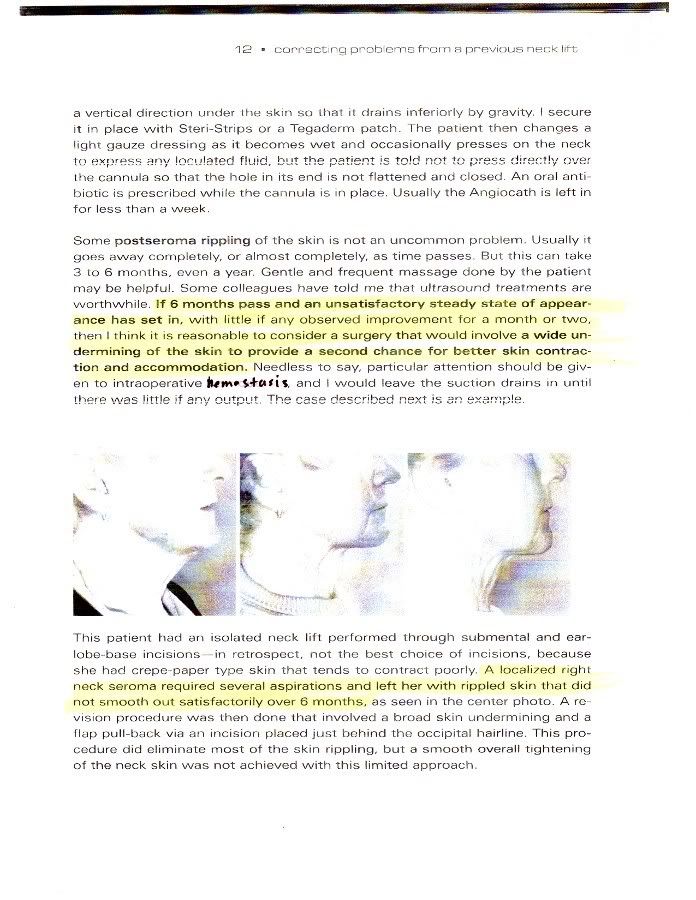
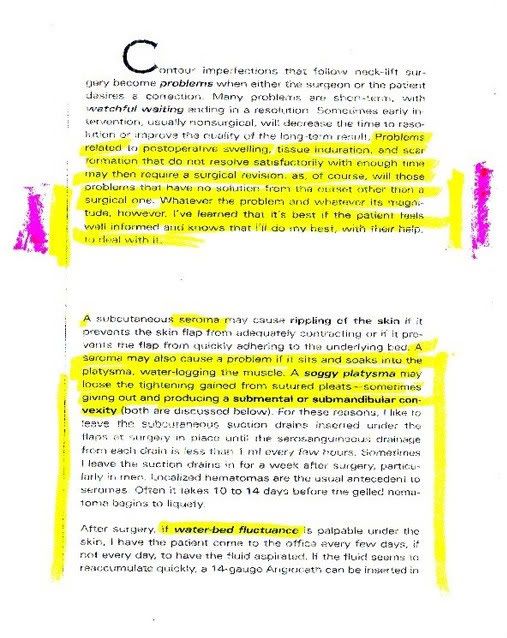
Is anyone stupid enough to believe that the sagging, detached sack of soft tissue that is my face and neck is "normal stretchback" which occurs after a facelift just over 1 year old? That is what Dr. Feldman, Dr. James May and the deceitful surgeons at MGH tried to make me believe. This is TISSUE DAMAGE resulting from the trauma of a rhinoplasty done too soon (8 weeks) after a face lift in which the tumescent technique was used. Every patient consulting Drs. Feldman and May should ask them about my case and if they would ever subject one of their own patients to this guinea pig treatment. In fact, Dr. Feldman doesn't hesitate to re-operate on his private patients who end up with a minuscule area of post-seroma rippling. My seroma involved my whole face and neck- all areas involved in the facelift. But as a "clinic patient" they thought it acceptable to treat me as if I were an experimental laboratory animal...disposable. In his book, Dr. Feldman states "If 6 months pass and an unsatisfactory state of appearance has set in, then I think it is reasonable to consider a surgery that would involve a wide undermining of the skin to provide a better chance for skin contraction and accommodation". How fortunate for his private patients. I tried to become one of them, stating in writing that I was willing to pay his full fee. However, his secretary, Laura Keefe, refused to give me an appointment, and informed me that once anyone becomes a patient at the MGH Residents' Clinic, Dr. Feldman will NOT see them as a private patient.
~~~~~~~~~~~~~~~
October 18, 2007

Dear Dr. Feldman:

Today is my birthday. I am 58 years old. Ten years ago I decided to give myself the ultimate birthday gift..a facelift. On October 16, 1997, I entered the Plastic Surgery Residents' Clinic at MGH at a point in my life where I had everything I ever wanted. I was in perfect health, enjoyed the love of friends and family. My life was rich, not in money or material things, but in ways money cannot buy... through my love and appreciation for nature and my creative ability to enhance that beauty as a gardener.

I was blessed at birth with a pretty face. Like most women, I enjoyed enhancing my appearance with cosmetics, keeping my body fit and healthy, adorning myself with clothes of my own design.
At 48, I succumbed to the allure of a facelift. As a well informed patient, my expectations were reasonable. I cut doctors more slack than most, having lived and worked with an MD for 12 years. I trusted doctors, as those I knew personally never displayed a hint duplicity.

The simple effort of typing this post leaves me short of breath. I am forced to live with a piece of wood pressed hard against my neck 24 hours a day to breathe. Things that require the use of two hands must be done in fits and starts, like a swimmer coming up for air. So I will not revisit details about my surgeries I have repeated ad nauseum on my website Losing Face.

The message I wish to convey to you today... my birthday, is this: Your decision, in conjunction with Dr. James May, Director of the Residents' Clinic, to perform my rhinoplasty 8 weeks after my facelift and lower blepharoplasty was imprudent and irresponsible. Your decision resulted in permanent tissue damage to all undermined areas of my face and neck. The massive swelling after my rhinoplasty damaged the newly forming adhesion between the tissue planes. My face and neck was one massive seroma; resulting in what you call a "soggy" platysma.

You refused to see me as a private patient when I offered to pay your full fee. You agreed to see me 8 months after the injurious rhinoplasty and claimed your "examination" revealed no "abnormality". While I begged and pleaded for MGH to perform simple dermatological studies on the effected tissue, even if nothing could be done surgically to improve the appearance of the sagging face I did not have before my facelift, you and MGH ignored me. You and MGH forced me to waste months of my life behind a keyboard, writing letters, literally begging and groveling for you to recognize "complications" you mention in your book "Neck Lift".

Dr. Feldman, it was your responsibility to perform my revision surgery, according to the consent I signed at MGH. Please remember that I based my decision to undergo rhinoplasty only 8 weeks after my facelift because I believed it must be safe if approved by a surgeon with your illustrious reputation. You forced me to seek a revision elsewhere and that surgery left me unable to lift my head, close my jaw, breathe or swallow normally since the day of the operation. The damaged platysma, thinned and stretched to the limit of its biomechanical extendability, was surgically manipulated in a manner that is literally killing me. Dr. 's surgically created fixed contracture of a muscle sheath devoid of any ability to stretch, has transferred the inappropriate vectors of tension to adjacent tissue. Over six physically torturous years, it has gradually and continually displaced the internal anatomy of the throat, causing the positional airway obstruction diagnosed by a pulmonologist in 2004.

The surgeon in Hyannis who removed my sutures after Dr. Barry Eppley's revision facelift said he would consider releasing the platysma muscle "if I twisted his arm". That was in July 2001 when I saw him for injection of a trigger thumb. His notes do not mention our discussion about my inability to lift my head or close my jaw, though on that day, he drew a diagram of the transverse incision he always uses in face/neck lifts, which Dr. Eppley neglected to use, in spite of his agreement to to do so. I know my own anatomy and the limitations the damaged tissue would impose upon revision. I was certain my revision would require, without exception, a release of that muscle one way or another. My present state proves I was correct.

You tried to have my accurate photos removed from the Internet with your lawsuit in Sept 2002. In October 2002, I called the doctor who originally removed my sutures intending to "twist his arm" to perform the platysma release. His secretary phoned me to say the doctor suggests I return to.. in Indiana.. when I had not been able to drive to Boston by myself because I could not lift my head to see the road and breathe at the same time. I believe your lawsuit influenced his decision, as I know it has that of other surgeons from whom I sought help... not for aesthetic reasons, but to literally save my life.

I am dying, Dr. Feldman, from an operation I would never have sought elsewhere if you had addressed my legitimate problem in a timely manner. You told writer Rich Bergeron that you did not operate on me because you thought you could not make me "happy"... Happy? I am trying to save my life! You are responsible for my ending up in the hands of another surgeon...one who led me to believe he understood the limitations of the compromised tissue you caused with your irresponsible decision to supervise my rhinoplasty before my facelift was sufficiently healed.

You told Rich Bergeron that I did not have swallowing difficulty after my rhinoplasty. Strictly speaking, I was able to swallow.. I did not have dysphagia.. Yet I have a tape recording of my conversation with Dr. May in which I am telling him the sagging tissue of my neck made chewing and swallowing feel like hard work, that I had pain directly in the area of the platysma plication when I swallowed. In this taped conversation I reminded him that the consent form stated that if a revision was necessary, the surgeon's fee would be waived. I told him that it was obvious to me that the platysma plication tore through or separated after the rhinoplasty swelling, which my documented photographs clearly prove.

Your arrogance and deceit in trying to make a judge believe it was humanly possible to deliberately contort one's face to cause the appearance of sagging I did not have before the facelift is evidence of the double standard you engage for your private patients as opposed to "clinic" patients. You prove this aspect of your character in your own book. I am certain you didn't accuse the patient with the "crinkly skin" that did not "stick down" of deliberately contorting her face and neck to make it "appear" that way as you did to me. In fact, anyone, regardless of age or skin tone, would find it quite IMPOSSIBLE to deliberately contort their face to create the sagging in my photos.

You accused me of having BDD, which I never had. I have always been far less demanding than the average patient, willing to accept the imperfections that are bound to occur. Your lawyers chewed me up and spit me out for telling the truth on the Internet, which you forced me to do because you chose to deny the obvious. I have been exploited by filmmakers, demeaned by your unscrupulous attorneys and libeled in a medical journal. You have ignored the reality of the destruction of a life which your decisions facilitated.

I am still alive, but just barely hanging on. Rich Bergeron contacted me one year ago wanting to write about my experience after seeing the HBO documentary in which I appeared, because the film made him feel as if something was "missing" from my story as it was portrayed. His intuition was accurate. He is, or more accurately, was optimistic that in interviewing the doctors involved in my surgeries, he would initiate a "happy ending" to my story. At that point, he was not able to accept that I would be left to die a slow death, suffering increasing disability until I am no longer able to survive on my own. Having accompanied me on my last appointment with an ENT specialist, he now believes differently...

I need to tell you, while I am still able, that your decisions regarding my case were fatally flawed. I have been robbed of 10 years of peace of mind, and subjected to 6 /12 years of continual physical torture. You could have prevented this, but you did not. You accused me of heinous lies and morphing photographs when you had a direct hand in causing the damage depicted in those accurate photos. I have forgotten the kind and caring person I used to be. You betrayed my trust. I hope you are never allowed to forget me when I am gone. I know Rich Bergeron will never forget what he has witnessed of my life this past year, and I know he will set the record straight regarding my experience, even if it does not have the happy conclusion he wanted. You told Rich that you thought of contacting me... but you did not. Why not? Did you not realize that all I wanted was to be treated like a human being?

I TRUSTED you. I never wanted to point the finger of blame at any doctor, but neither could I allow an opportunity for doctors to learn from my suffering to be thrown by the wayside because doctors cannot admit they are only human and make mistakes. You misjudged me because you never allowed yourself to see me as a human being, rather than a surgical case at the Resident's Clinic. You have no idea whom you helped to destroy. That sensitive, kind person died.. killed by the arrogance of a profession impressed by its own narcissistic power.

I am trying to save my life. I have begged and groveled for doctors' help for years when you and MGH deliberately denied the reality of the tissue damage. Your lawsuit which attempted to force removal of my photos from the Internet served to BLACKLIST me from receiving the medical attention I now require to SAVE MY LIFE. You are capable of saving my life.

If you remain silent and do nothing to help me, I want people to know of your refusal to accept responsibility for your actions and your disregard for my appeal to help save my life before it is too late. .
Shalom, Dr. Feldman...

~~~~~~~~~~~~~~~~~~~~~~~~~
Photos documented by legal photographer.. No room for misrepresentation here. You cannot FAKE or deliberately contort your face to produce the sagging and "detachment" caused from massive swelling of a rhinoplasty performed too soon (8 weeks) after a facelift. This is what Dr. Feldman DENIED happened, and worse, falsely accused me of deliberately posting misleading photos online. His colleague, Dr. Barry Zide, who made libelous reference to me in the Journal of Plastic & Reconstructive Surgery by accusing me of morphing photos he called "ghoulish", reviewed these same photos himself, shortly after my surgery at Mass General.. He certainly wasn't calling them morphed then.


Watch Interview with photographer & filmmaker Erika Hahn who followed my surgery journey with photo documentation for 10 years.

Sunday, January 27, 2008

Cosmetic Surgery Catastrophe


Interview with Erika Hahn, filmmaker, photographer, webmaster and my dear friend. For the past 10 years, Erika has given generously of her professional skills as a photographer and videographer in documenting the damaging results of my cosmetic surgeries. Listen to her comments on false statement made by Dr. Joel Feldman regarding accuracy of her photographs of my "fallen" facelift. Erika has been by my side through many consultations and meetings with plastic surgeons, always with sensitivity, compassion and moral support.
Here are observations of one who has been there for me every step of they way.